
Throughout this semester, I’ve actively participated in live discussions centred around films that offer diverse perspectives on the future. These sessions have been a journey of self-discovery, where I’ve analysed the themes of each film in real time, delving into how they intersect with broader societal issues and technological advancements.
I’ve been able to explore how these films portray the evolution of technology and its impact on humanity. Whether it’s the simulated reality of “The Matrix,” the immersive virtual world of “Ready Player One,” or the linguistic challenges of extra-terrestrial communication in “Arrival,” each film presents unique opportunities to contemplate the trajectory of our future cultures.
Engaging in live reactions to these films has undoubtedly been a learning curve for me. Initially, I approached each screening with a surface-level understanding, focusing primarily on the storyline and visual elements. However, as the semester progressed, I quickly realized that there was much more to uncover beneath the surface.
One of the most significant learning curves has been integrating subject themes into real-time analysis. At first, I found it challenging to connect the themes of the films to broader concepts such as artificial intelligence, societal trends, and ethical dilemmas. However, with each discussion, I honed my ability to identify and dissect these themes, delving deeper into their implications for our future.
Furthermore, collaborating with peers brought its own learning curve. While their insights were invaluable, navigating differing perspectives and interpretations required active listening and open-mindedness. Learning to appreciate diverse viewpoints enriched my understanding of the films and broadened my perspective on future cultures.
The Matrix
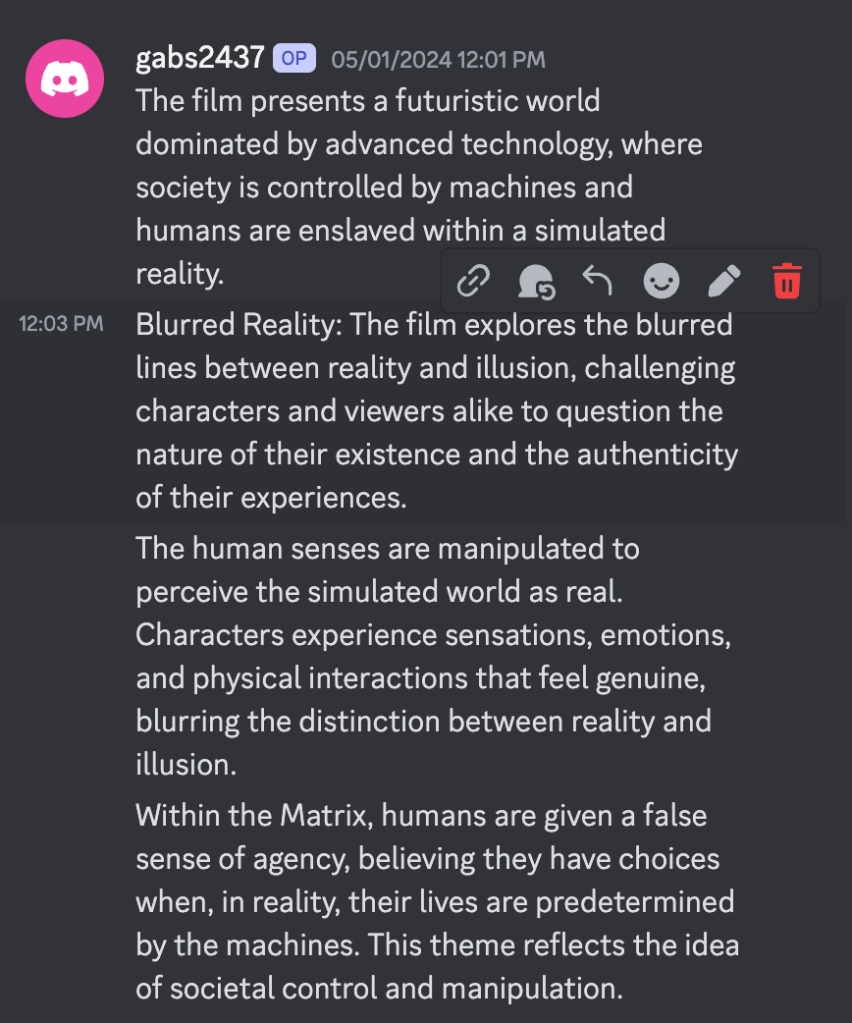
“The Matrix” served as a compelling lens through which I delved into the realms of cyberculture and decision-making, themes that permeated the film’s narrative with profound significance. As I immersed myself in the world of the Matrix, I found myself captivated by its exploration of the intersection between human consciousness and technology, offering a thought-provoking commentary on the implications of our increasingly digitized existence.
The film’s portrayal of a simulated reality controlled by sentient machines prompted me to reflect on the complex relationship between humanity and technology. It raised poignant questions about the nature of reality, free will, and the consequences of our technological advancements. Through the protagonist Neo’s journey of self-discovery and liberation from the confines of the Matrix, I was compelled to confront my own assumptions about the role of technology in shaping our lives and identities.

Ready Player One:
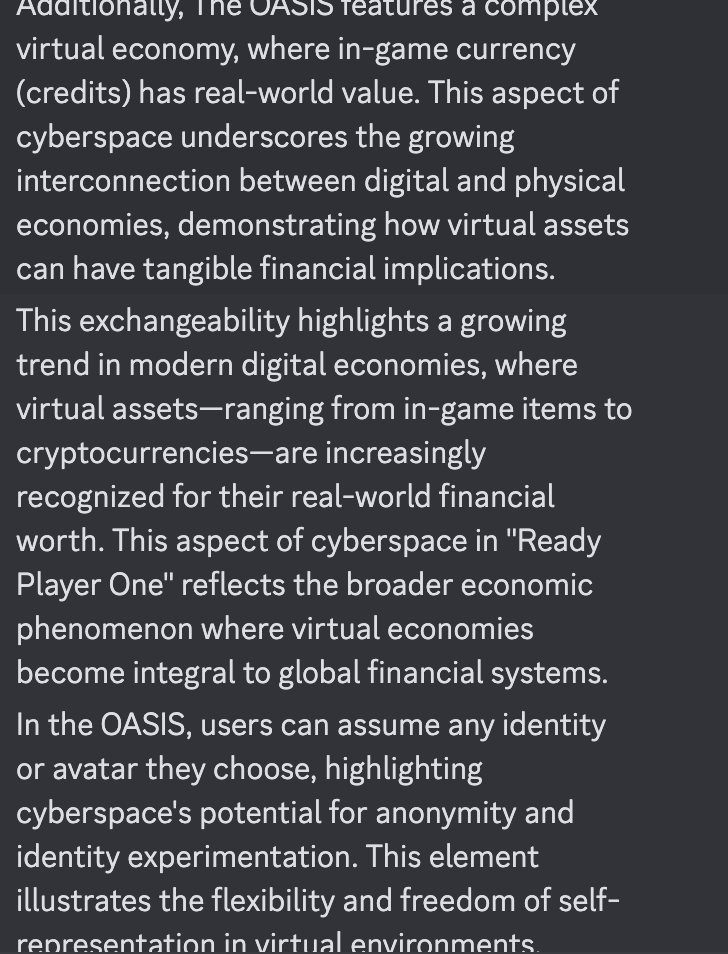
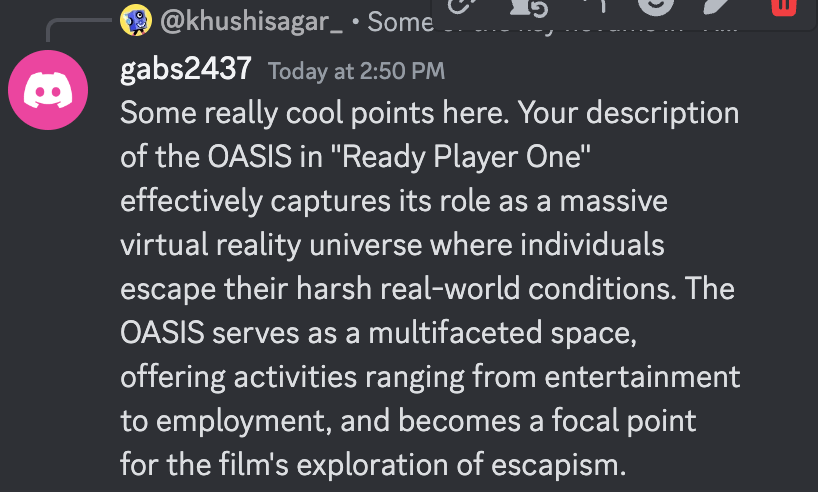
“Ready Player One” sparked thought-provoking discussions on various fronts, including cyberspace and virtual reality, the Anthropocene epoch, and societies of control. These conversations were enriched by insights drawn from Lambach’s work in 2020, particularly regarding privacy and data protection amidst the proliferation of geolocation technologies.
The film’s depiction of a sprawling virtual universe, the OASIS, invited exploration into the concept of cyberspace and its implications for society. As characters navigated this digital realm, I found myself contemplating the blurred boundaries between the virtual and the real, and the ways in which technology shapes our perceptions of reality and identity.
Lambach’s insights regarding the vast amount of personal data collected through geolocation technologies resonated strongly in the context of “Ready Player One.” The film’s depiction of a world where individuals’ movements and activities are tracked and monetized underscored the urgent need to address issues of privacy and data protection in the digital age. The convergence of these themes prompted nuanced discussions about the ethical implications of technological advancements and the importance of safeguarding individual rights in an increasingly interconnected world.

Arrival:
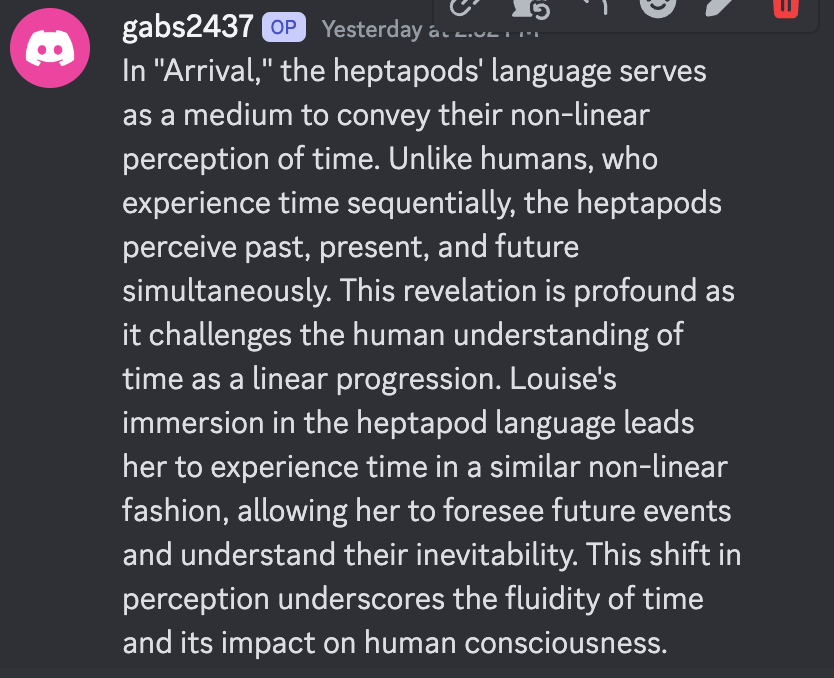
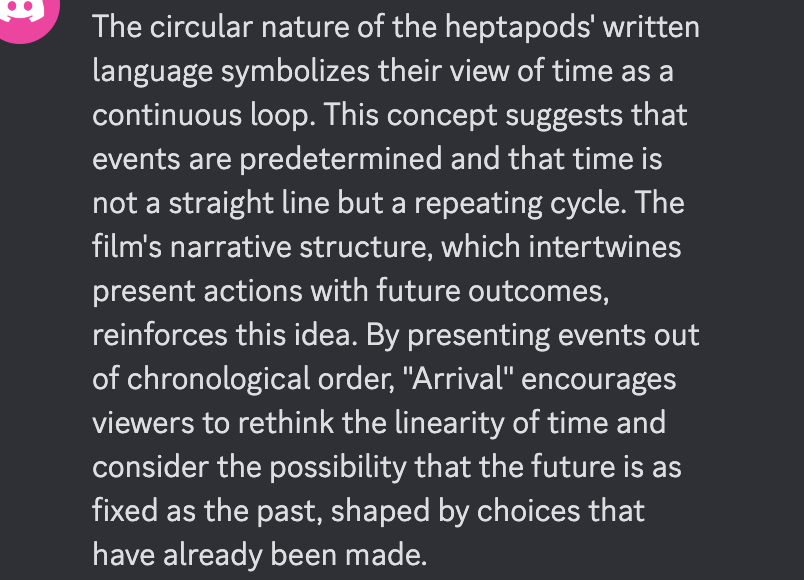
“Arrival” captivated my attention with its portrayal of the enigmatic heptapods, whose technology and intelligence surpass human comprehension. This depiction prompted contemplation on the future trajectory of artificial intelligence (AI), where it’s speculated that AI could potentially transcend human intelligence, leading to entirely new paradigms of communication, problem-solving, and existence. Just as the heptapods in the film operate on a level beyond human understanding, we pondered the implications of AI advancements for humanity’s future, including the potential for AI to revolutionize the way we live, work, and interact with technology.
Additionally, the profound role of language as a fundamental tool for human interaction, understanding, and perception also has a significant role. The film provided a captivating exploration of how language serves as more than just a means of communication; it fundamentally shapes our cognitive processes, worldview, and even our sense of reality.
Peer collaboration:
Collaborating with peers brought its own set of challenges and rewards. This collaborative environment necessitated a balance between expressing my own viewpoints and genuinely considering those of others. Each discussion became a learning opportunity, broadening my perspective on the cultural, ethical, and technological themes presented in the movies. For instance, while I might have focused on the technological aspects of “The Matrix,” a peer’s emphasis on its philosophical implications regarding free will and control added a new layer of depth to my analysis.
Additionally, this collaborative learning experience highlighted the importance of empathy and respect in academic discussions. By appreciating and integrating diverse viewpoints, I was able to develop a more nuanced and comprehensive understanding of the films and their projections of future cultures. This approach not only enhanced my analytical skills but also prepared me for future collaborative endeavours, where the ability to navigate and synthesize multiple perspectives is invaluable.
In essence, peer collaboration transformed my individual learning journey into a collective exploration of ideas, enriching my understanding of the films and expanding my horizons on the diverse visions of the future they presented.


References:
Lambach, D., 2020. The Territorialization of Cyberspace. International Studies Review, Volume 22, p. 482–506.
Discord Links:
https://discord.com/channels/1179652660769607730/1235047938040926299/1235047938040926299
https://discord.com/channels/1179652660769607730/1240118415553855488/1240118415553855488
https://discord.com/channels/1179652660769607730/1247045225130496083/1247045225130496083
 To the Gong and Back