
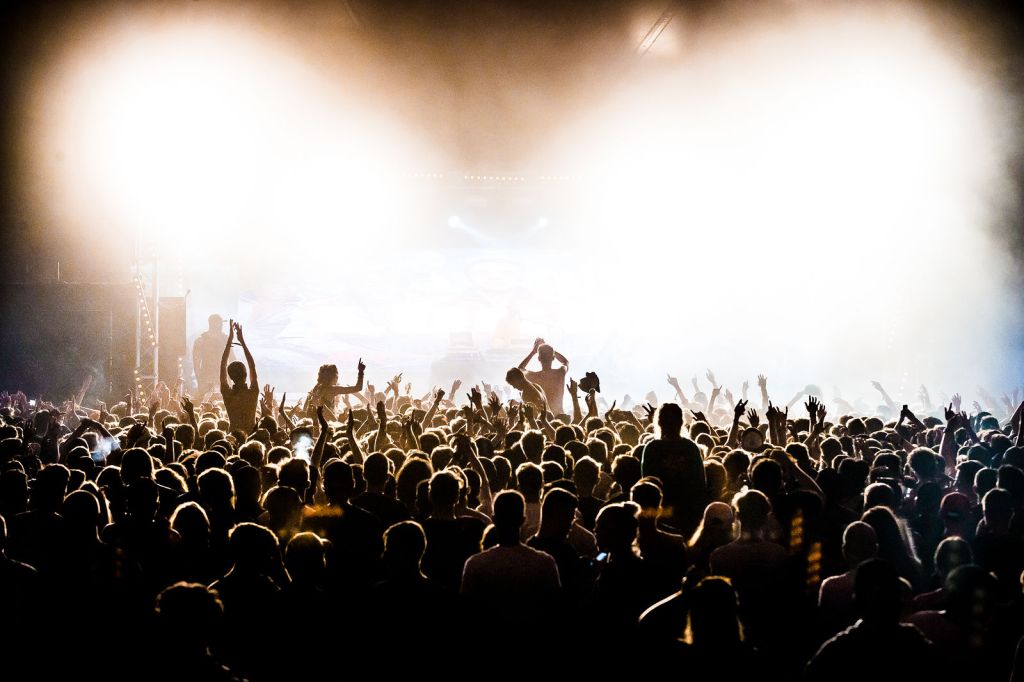
Audience’s. A crucial aspect of what makes media today, and how we perceive a variety of different forms. But what really are audience’s? An audience is a group of people who view, listen or consume any form of media, this can stretch from music, art, literature, theatre to now in more current terms, watching TV through streaming platform’s such as Netflix or YouTube. This week’s blog post will place a specific emphasis in being part of an audience and how this varies in different forms of media.
So, in saying all of this a perfect place to start will be based on my personal experiences in being a part of an audience, and the journey it has taken me on. I truly believe there are many unspoken rules that we encounter each day in being involved in audiences. This can stretch from scrolling through social media, to watching a sporting match or listening to music. For example, a sporting audience would obviously not celebrate the opposition scoring a goal if it’s not the team their supporting. However, a particular experience that is in great importance to me is listening to music and watching live performance’s. I love music and always have done, currently I produce my own and have performed at many live venues.
The way in which we consume music has completely shifted, we now have payed subscriptions to online streaming platforms such as Spotify and iTunes and can access millions of songs at our fingertips. These models of mass media and how we interact with the musical world, is an unspoken rule in a sense that many people don’t even realise how frequently they are interacting with the online music world, and variety of different musical genres they encounter. This can correlate to the ‘Hypodermic Needle theory’, which in turn is a theory of mass communication, and is one of the earliest postulations of the effects mass media can have on audiences. In relation to music, by virtue it is one of the most influential communication tools, music has become a permanent, constant and effective tool that can be used in mass media (Altınölçek, 2009:90). It brings cultures and people together, inspires upcoming artist such as myself and evokes particular emotions in people that they might not have even encountered before.
Similarly, when experiencing music live and being involved in an audience, for me is also a crucial aspect, as I get to encounter the music in it’s true state from the perspective of the crowd, and try and emulate that when I perform. Although, there are some negatives about live events specifically festivals, highlighted in the drug use and how the media negatively portrays these throughout the online world. For me in being part of both live and online presences, music is a powerful and spiritual tool that connects people, regardless of race and culture. Personally, in being involved in musical audience’s both online and physical, has inspired me to do what I do and will continue to do so in the future.
References:
Hypodermic Needle Theory (Magic Bullet Theory). By: Robinson, M. J., PhD, Salem Press Encyclopedia, 2018
lesson bucket. 2020. The Hypodermic Needle Theory | VCE Media, Victorian Curriculum, Media Arts, digital literacy, media education, filmmaking. Available at: https://lessonbucket.com/media-in-minutes/the-hypodermic-needle-theory/. [Accessed 20th March 2020]
Econsultancy. 2020. The impact of technology and social media on the music industry – Econsultancy. Available at: https://econsultancy.com/the-impact-of-technology-and-social-media-on-the-music-industry/. 15 March 2020.
Altınölçek, H. (2009). “Functional effects of music in creating emotional bonds in different societies”, 38. ICANAS Müzik Kültürü ve Eğitimi, Vol.1 Atatürk Kültür, Dil ve Tarih Yüksek Kurumu, Ankara.
 To the Gong and Back